Can someone record you on a video chat?
 WomChat editorial team Published 8 min read

Yes. Anyone on the other side of a video chat can record it — with the screen recorder built into their phone or computer, or simply by pointing a second camera at the screen — and no website or app can fully prevent that. The good news is that you can make a recording almost worthless by controlling what you show and say, and if someone ever threatens you with one, there are clear steps and free tools that help.
Key takeaways
- Screen recording is always technically possible on any video chat, because phones and computers include built-in recorders.
- No platform can stop someone filming their screen with a second device, so treat every video chat as if it could be saved.
- The most effective protection is what you control: your face framing, your background, your name and what you're willing to do on camera.
- If someone threatens to share a recording, don't pay, stop contact, keep evidence and report — official agencies like the UK's National Crime Agency give exactly this advice.
- Free tools such as StopNCII.org (for adults) and Take It Down (for images taken under 18) help stop private images being shared on participating platforms.
The short answer: yes, any video chat can be recorded
It's tempting to believe a private one-to-one chat stays private. Technically, though, everything you show on camera is displayed on someone else's screen, and anything on a screen can be captured.
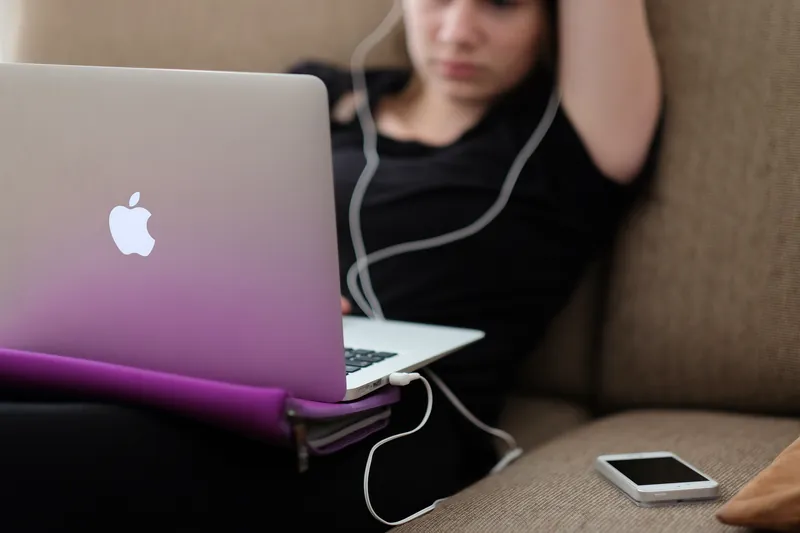
Modern devices make this trivial. Apple's own guide shows how to record the screen on an iPhone or iPad from Control Center in a few taps, with an option to include microphone audio. Computers have equivalent built-in tools, and countless third-party recorders exist.
This isn't a flaw of one website — it's true of every video service, from big-name meeting apps to any random video chat or mobile video chat. Accepting that up front is the first step to staying safe.
How people record video chats
Knowing the methods helps you understand why no platform can promise 'no recording'. The common ones are simple:
- Built-in screen recorders on phones, tablets and computers, often with audio.
- Screenshots — a single still image taken in a fraction of a second.
- Third-party recording or streaming software running in the background.
- A second phone or camera pointed at the screen, which leaves no trace on the device being filmed.
- Fake 'video' feeds: some bad actors play a pre-recorded clip instead of a live camera while they record you.
What platforms can and can't prevent
Video chat services can make recording less tempting and easier to punish, but they can't make it impossible. Here's a realistic picture of what any platform can do.
| Risk | Can a platform prevent it? | What actually helps |
|---|---|---|
| Screen recording on the other person's device | No — it happens outside the website | Controlling what you show |
| A second camera filming the screen | No | Controlling what you show |
| Screenshots | Rarely — some apps try to block or detect them on certain devices, but it's easy to work around | Assume screenshots happen |
| Bots and fake accounts | Partly — through verification and moderation | Using moderated services; skipping anything suspicious |
| Repeat offenders | Yes, to a degree — reports lead to bans | Reporting abuse every time |
| Someone learning your identity | No — that depends on what you reveal | Nickname, neutral background, no personal details |
What WomChat does — and what it can't do
On WomChat, women's profiles are verified and human moderators remove bots and abusive accounts. Every chat has skip and report buttons, and our community rules forbid recording or sharing other people without consent.
Like every other video service, though, we can't stop someone using a recorder on their own device. That's why we'd rather be honest about it than promise something no platform can deliver. Your own habits are the strongest layer of protection, and they work on any service — including if you prefer to stay anonymous on video chat.
Checklist: how to reduce the risk of being recorded
You can't stop recording, but you can make sure a recording reveals nothing useful and gives nobody leverage. Run through this before and during every chat:
- Use a first name or nickname — never your full name, workplace or school.
- Check your background: no mail, ID badges, family photos, uniforms or a recognisable view from your window.
- Frame yourself sensibly and stay fully dressed, as you would on any video call with a stranger.
- Never do anything on camera because someone asks you to 'prove' something or 'return the favour'.
- Be wary if the other person's video looks looped, never reacts to what you say or won't show their face while asking to see yours.
- Don't move to another app or share social handles early — that hands a would-be blackmailer your contacts.
- Skip and report the moment something feels off. You never owe anyone a conversation.
Warning signs that someone plans to record or blackmail you
Most people on a video chat just want to talk. But recording-based scams follow recognisable scripts, and spotting them early lets you leave before anything happens — and you never need an excuse to end a video chat that feels wrong.
- They push the conversation toward intimacy very quickly, often with flattery.
- They ask to move to another app, or for your social media accounts, within minutes.
- Their video seems pre-recorded: no reaction to your words, odd loops, or the camera 'doesn't work'.
- They ask personal questions about your friends, family, job or city.
- They suddenly ask for money, gift cards or crypto, or mention a 'problem' you could help with.
What to do if someone threatens to share a recording
If someone says they've recorded you and demands money or anything else, it's frightening — but you are the victim of a crime, not the one in trouble. The UK's National Crime Agency advice on sextortion is clear and applies almost anywhere:
- Don't pay. Paying rarely ends the threats; it usually leads to more demands. If you've already paid, don't pay again.
- Stop all contact and block the person on every platform — but don't delete the conversation.
- Keep evidence: screenshots of messages, usernames, profile links, payment requests and any links where content was posted.
- Report the account to the platform where it happened (on WomChat, use the report button and contact support).
- Report to the police. In the UK the NCA points to 101, or 999 in an emergency; elsewhere, contact your local police or national cybercrime reporting service.
- Use a takedown tool if private images are shared or you fear they will be (see the next section).
- Talk to someone you trust or a support service. You don't have to deal with it alone.
Free tools that help stop private images being shared
Two free services let you protect images without sending them to anyone. Both create a digital fingerprint (a 'hash') of the image on your own device, and participating platforms use that fingerprint to detect and remove matching copies.
StopNCII.org is for adults: it's designed for people who were 18 or over when the image was taken. Its site explains that the hash is generated directly on your device and the images themselves aren't uploaded.
Take It Down, run by the US National Center for Missing & Exploited Children (NCMEC), is for images or videos taken when the person in them was under 18. It works the same way: the image stays on your device and only the hash is shared.
Neither tool can remove content from every corner of the internet, since they work with participating companies. They're still a powerful, private first step, and you can use them alongside a police report.
Is it legal to record a video chat? (General note)
Laws about recording conversations vary widely by country, and sometimes by state or region. Some places require everyone's consent to record; others allow recording if one participant agrees. What is far more consistent is that threatening to share private images to get money or anything else — extortion or blackmail — is a crime in most countries, and many have specific laws against sharing intimate images without consent.
This article isn't legal advice. If you're dealing with a threat or a recording, talk to your local police or a qualified lawyer where you live. And on WomChat, recording or sharing other users without consent breaks our terms of use and leads to removal.
Bottom line: enjoy video chat with eyes open
Recording is always possible, but it only becomes a problem when a recording contains something someone can use against you. Keep your identity private, keep your background neutral, keep your conversations respectful and skip anyone who pushes you — that combination makes you a very poor target.
With those habits, video chat stays what it should be: a fun way to meet people around the world. If you're still choosing a service, compare moderation and features in our look at the best Omegle alternative options and read what happened to Omegle to see why moderation matters so much.